NFT City
NFT marketplace and minting platform built to handle real listing volume without falling over
Visit Live SiteAbout this project
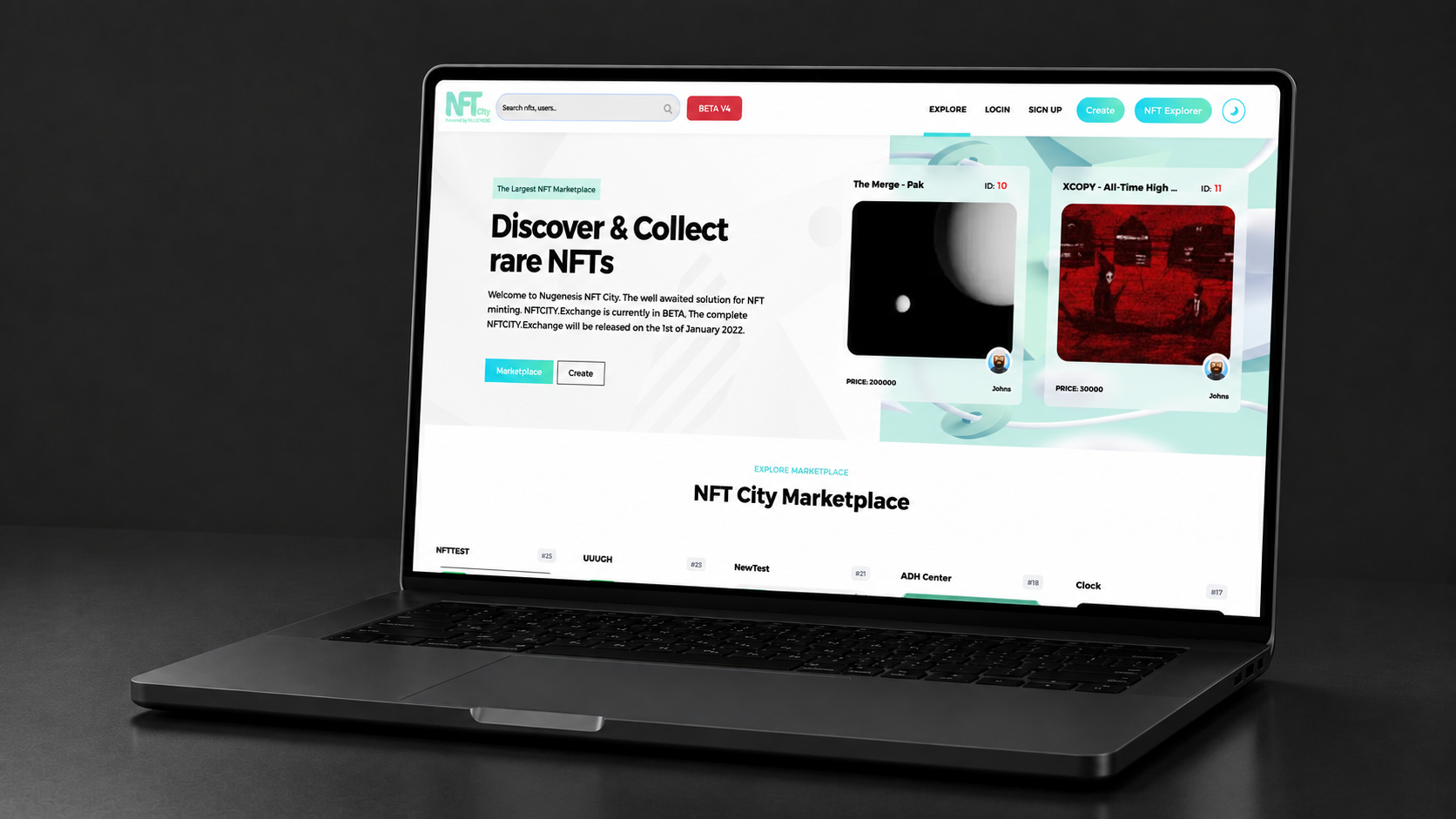
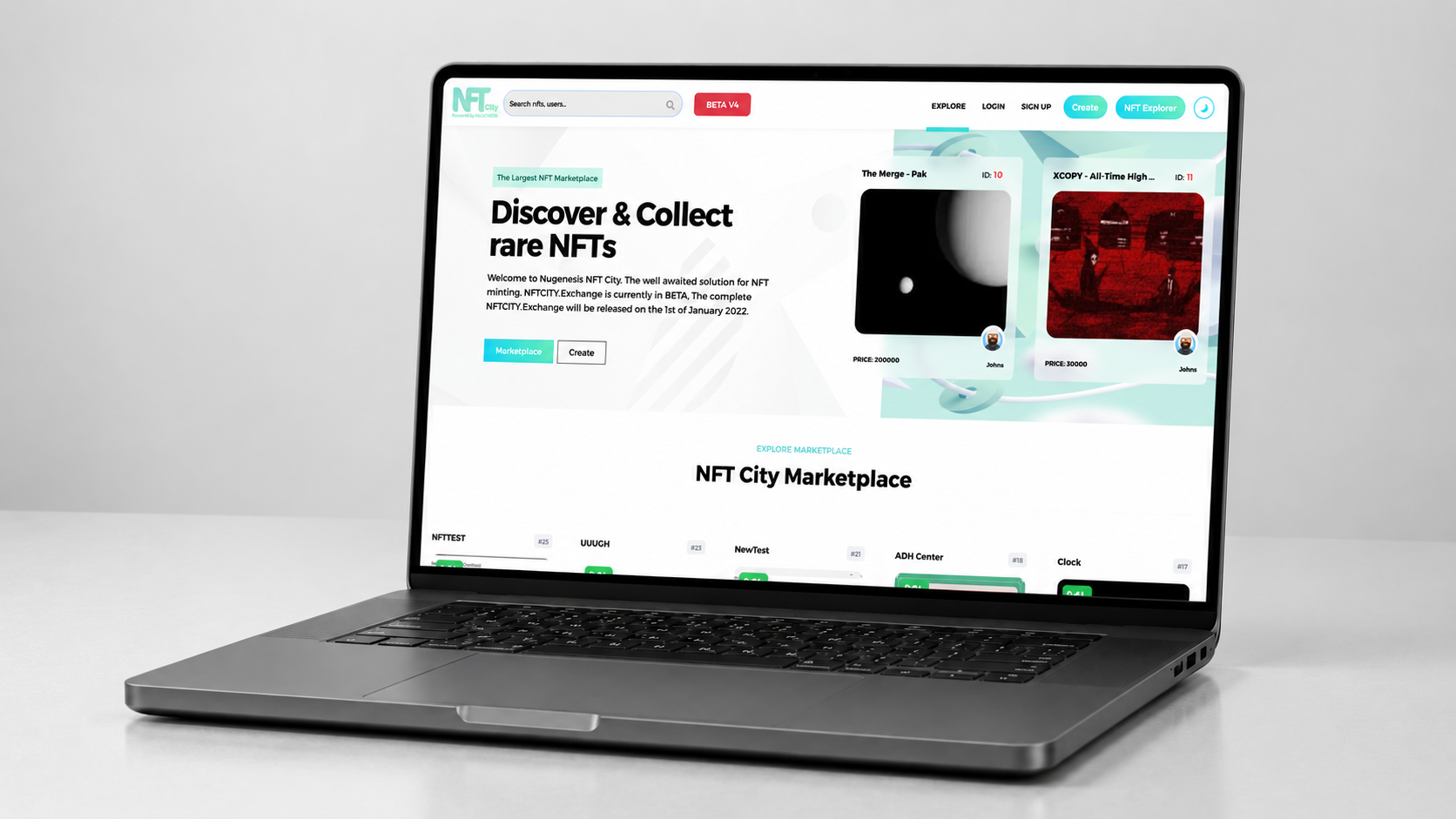
NFT City is a marketplace for discovering, collecting, and minting NFTs, built on top of the NuGenesis blockchain ecosystem. Users can browse a live marketplace of listings with pricing, ownership, and creation history, mint their own single-edition collectibles through a guided creation flow, and connect a non-custodial wallet without ever handing over private keys. Single sign-on ties the platform into the wider NuGenesis network, so one account carries across the marketplace, the wallet, and the chain explorer. The engineering challenge behind a platform like this isn't the marketplace UI it's making sure a media-heavy catalog of NFT listings stays fast as it grows, and that traffic spikes around drops or trending collections don't take the platform down.
Browsing & Discovery at Catalog Scale
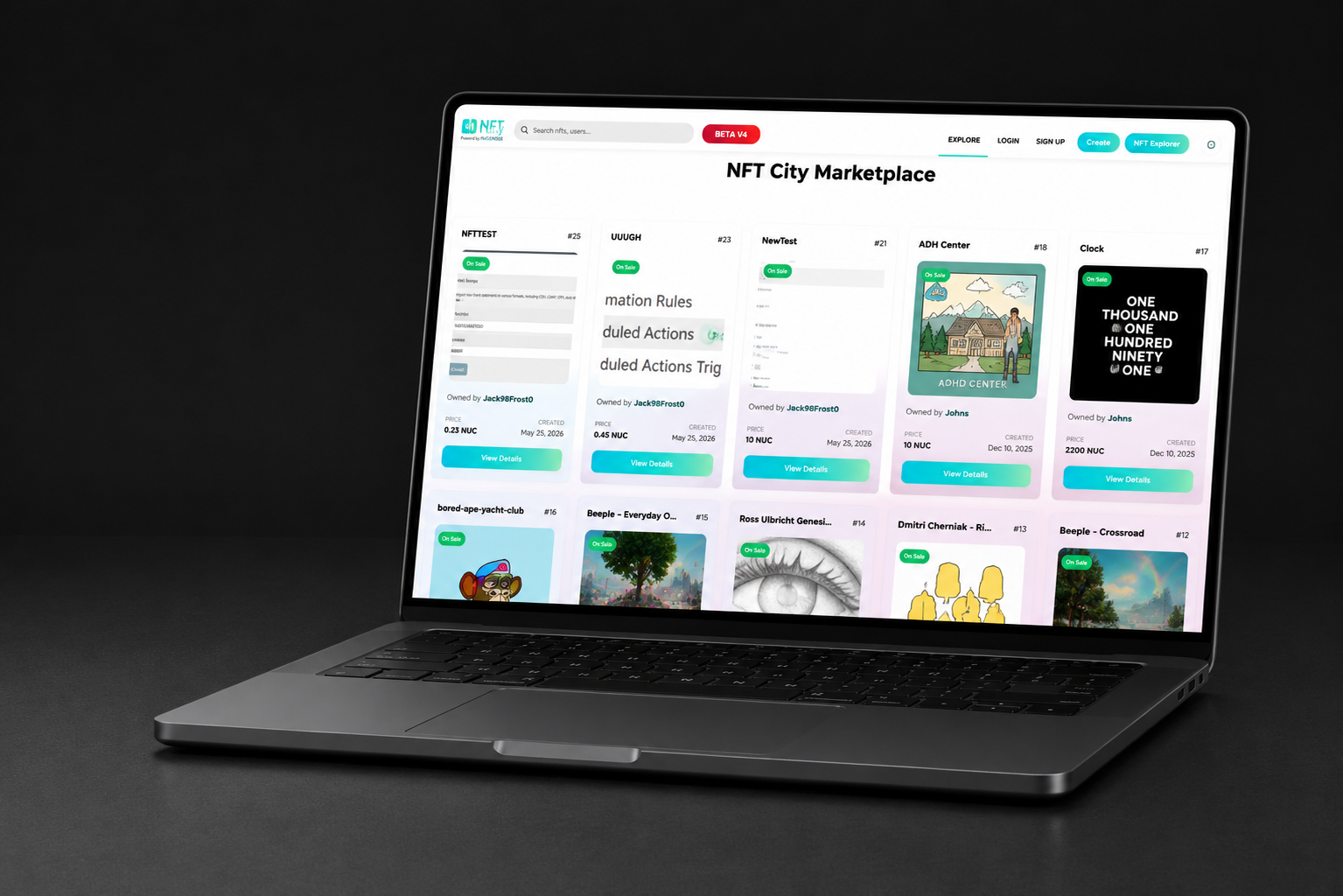
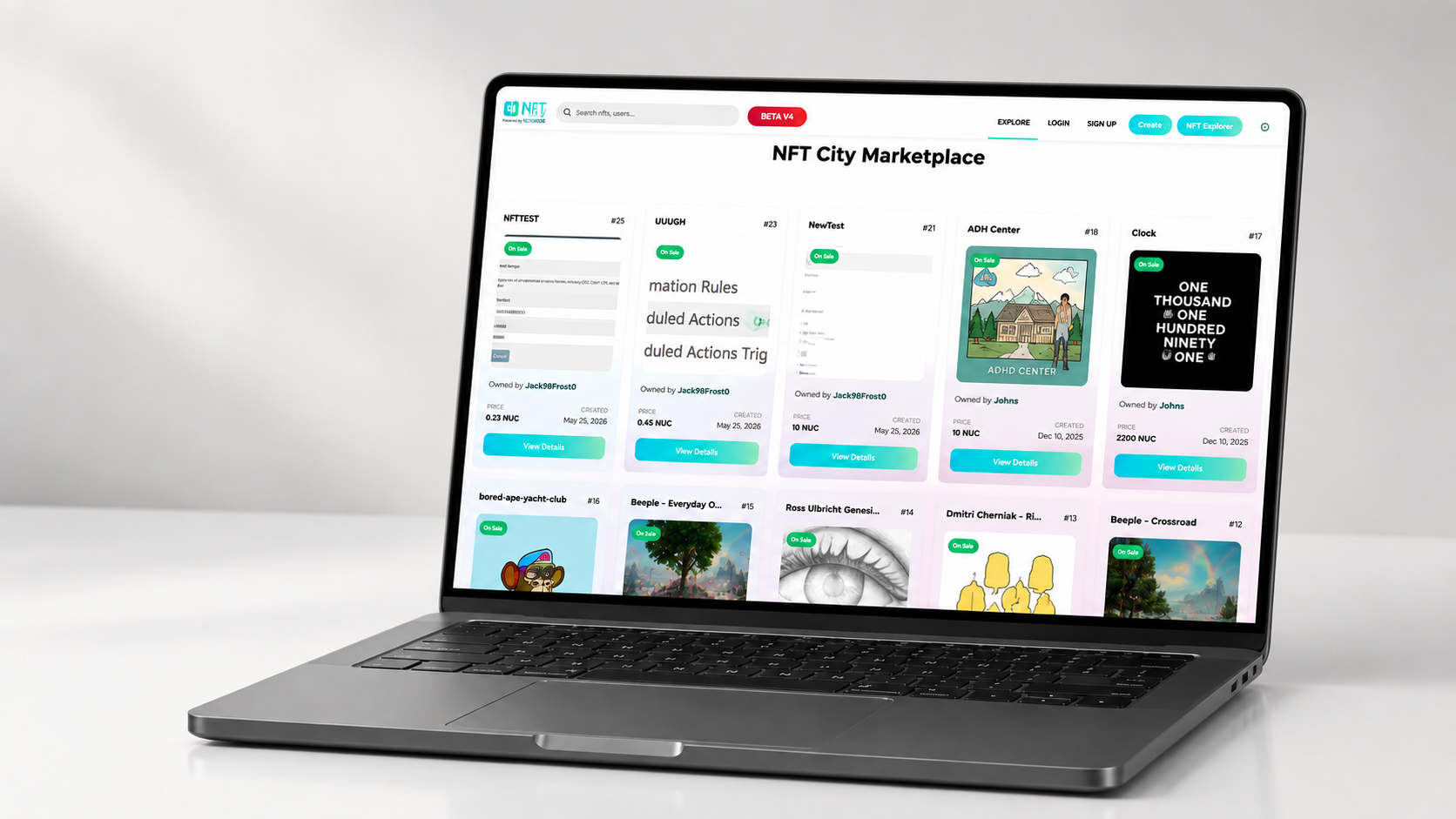
The marketplace grid is the part of an NFT platform that has to stay fast no matter how large the catalog gets every card is an image, a price, an owner, and a creation date, multiplied across thousands of listings and constantly re-sorted as new items get minted or sold.
- Paginated, filterable listing grid with live pricing and ownership data
- Per-listing metadata: price, owner, creation date, and sale status
- Detail pages for individual NFTs with full listing history
- Built to stay responsive as the catalog and image volume grow
Guided NFT Creation
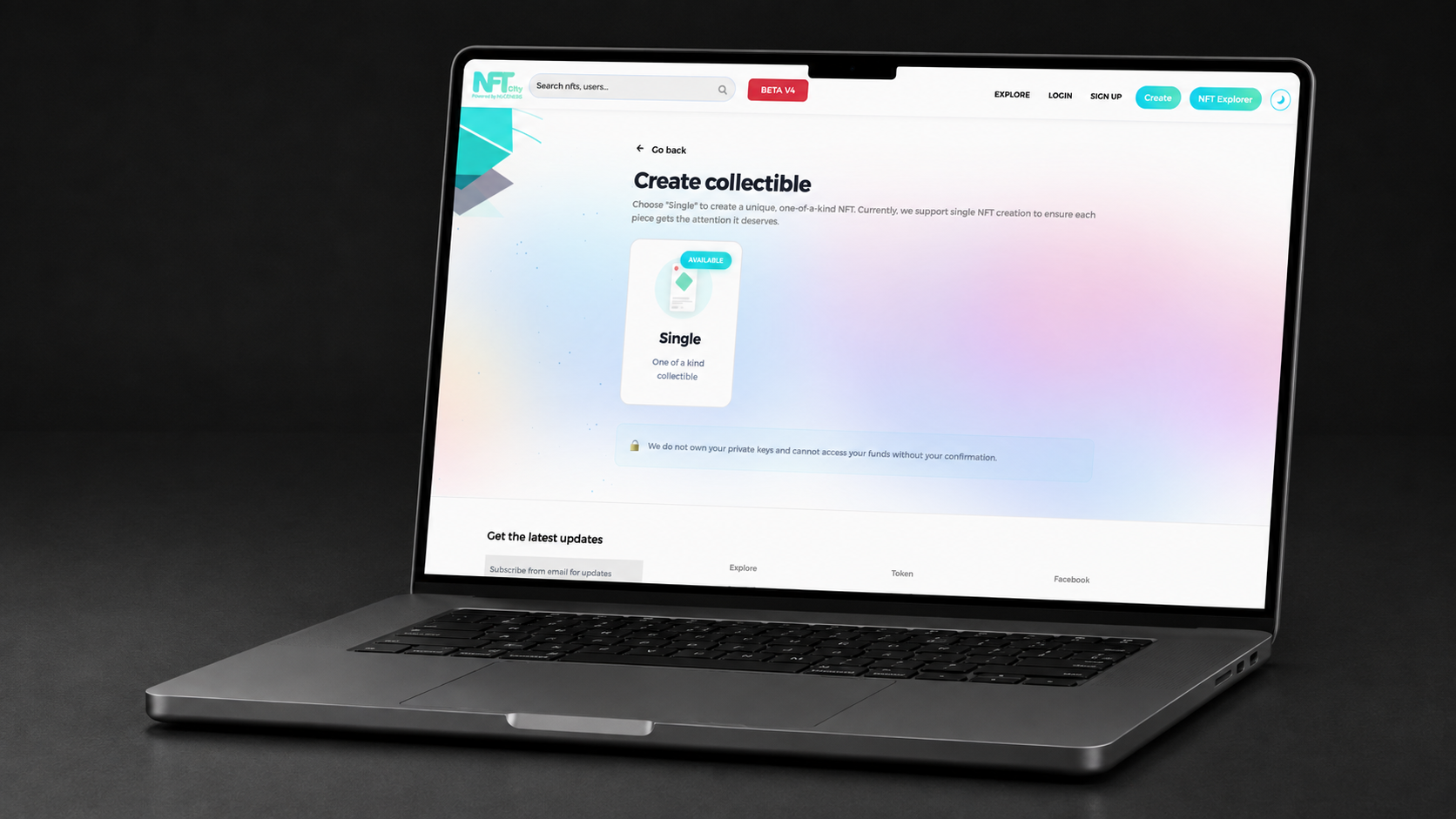
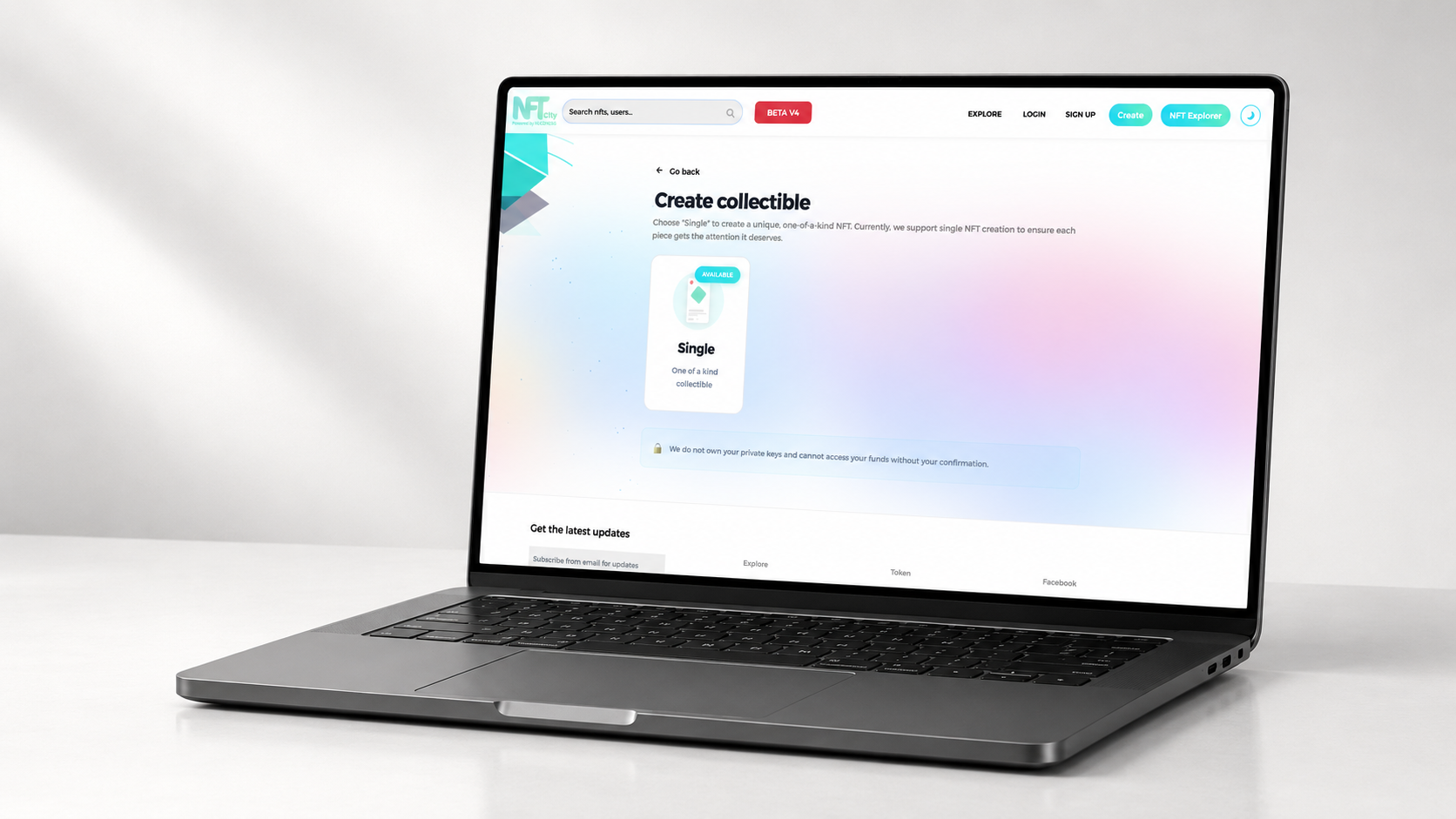
The create flow walks a user from raw artwork to a minted, listable NFT without requiring them to understand the chain underneath it wallet connection is non-custodial throughout, so the platform never has access to a user's private keys or funds.
- Single-edition NFT creation flow, one artwork at a time
- Non-custodial wallet connection private keys never leave the user's control
- Clear confirmation steps before any on-chain action is taken
The Infrastructure Behind the Marketplace
A marketplace like this lives or dies on how it handles media and traffic at scale, not just on its feature list. We build platforms in this category around a standard, proven pattern: NFT images and media assets stored in object storage (S3-compatible) rather than served from the application itself, fronted by a CDN so listing images load fast for every visitor regardless of where they are, with a load balancer distributing traffic across multiple application instances instead of a single point of failure. The application layer itself is split into focused microservices listings, minting, wallet and auth, and marketplace search each scale independently, so a spike in traffic to the marketplace grid doesn't slow down minting or vice versa. It's the same pattern behind most high-traffic marketplaces, applied deliberately rather than bolted on after the first outage.
- Object storage (S3-compatible) for NFT media, decoupled from the application layer
- CDN-fronted asset delivery so images load fast regardless of visitor location
- Load-balanced application instances instead of a single origin server
- Microservices split by responsibility listings, minting, wallet/auth, search so each scales independently
This project may have been built for a third-party client who outsourced development to TieTech Innovations, or for a direct client. It is shown to demonstrate our engineering work only see the disclaimer in the footer for details.